
Title: Microscale/small scale electron-exchange experiments as versatile teaching tools
Abstract: We have developed hands-on learning environments designed to help students gain a clear understanding of redox phenomena and electron-transfer processes at electrified interfaces. These activities rely on simple, low-cost materials and equipment, often including 10-mL beakers as reaction vessels; common conductive materials as electrodes (e.g., pencil leads, paper clips, and metal wires); solutions of everyday electrolytes (e.g., NaHCO₃, Na₂SO₄, and common oxidizing and reducing agents); basic power sources (e.g., 9-V batteries and low-cost regulated power supplies); and simple electronic components (e.g., resistors, thermistors, photosensitive elements, LEDs, and a student multimeter).
The experiments address a broad range of topics, including basic electrical elements and circuits, thermodynamics, kinetics, energy production and storage, inorganic and organic electrolysis, environmental principles and applications, and corrosion. A companion problem set of more than 200 questions, together with detailed solutions, supports deeper engagement with these subjects. In addition, a distance-learning experimental component developed and tested during the COVID-19 pandemic is discussed.
Short Biography
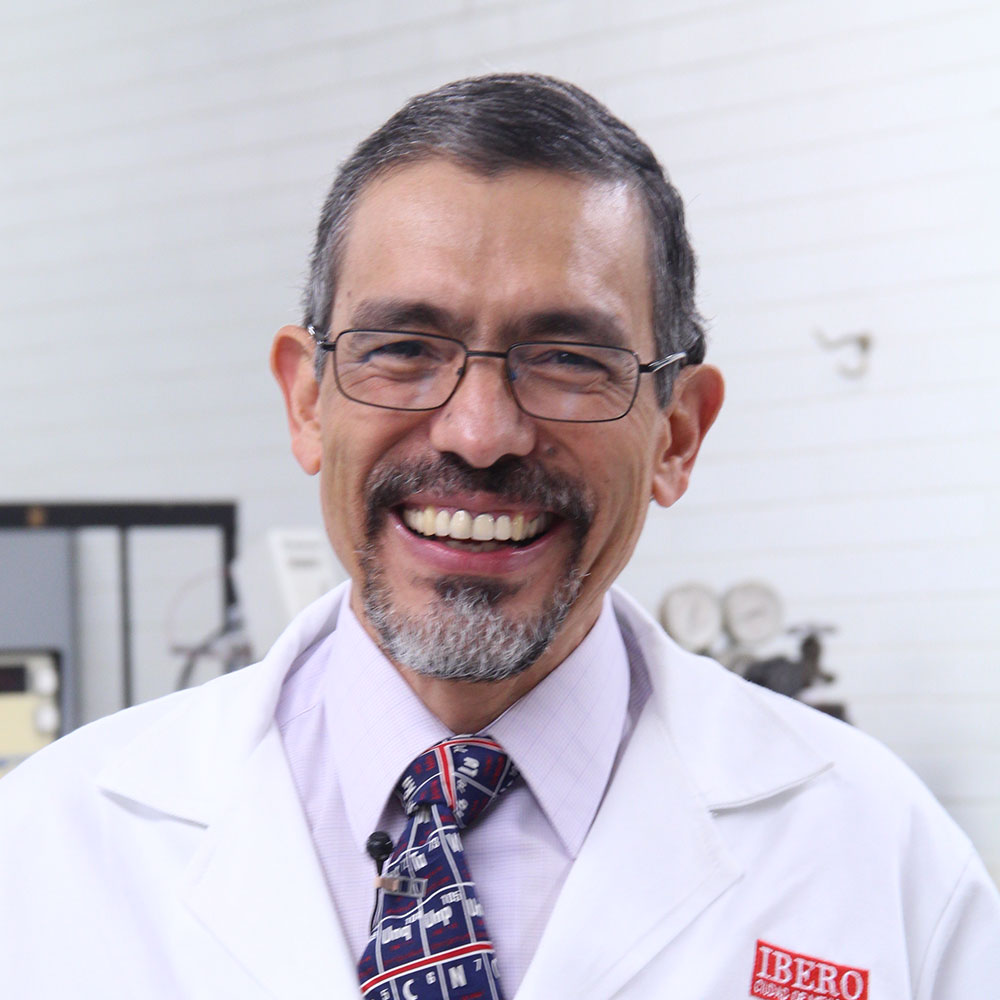
Jorge is an emeritus professor and former departmental chair at Universidad Iberoamericana, the Jesuit university in Mexico City. He received his B.S. in Chemical Engineering from ITESO (Mexico) and his Ph.D. in Physical Chemistry from the University of Houston (USA). He completed postdoctoral fellowships at the University of Houston and the University of Texas at Austin, and was a U.S. Government Fulbright Scholar at Loyola University Chicago. He is an Emeritus Member of the American Chemical Society, the Electrochemical Society, the International Society for Electrochemistry, and the National System of Researchers (Mexico). He is also an IUPAC Fellow and former President of the Mexican Electrochemical Society.
Jorge has published 13 books (one of them in Braille), 3 chapters in international encyclopedias, 152 articles in international peer-reviewed journals, 5 book chapters, one national patent, and one international patent presented in 10 countries under the Patent Cooperation Treaty. In the humanistic field, he collaborated with the Organisation for the Prohibition of Chemical Weapons (OPCW) in The Hague on the development of the Ethical Guide for the Use of Chemical Substances. In addition, he has promoted the teaching of experimental sciences for the visually impaired and has fostered constructive dialogue between faith and science through lectures, articles, interviews, radio segments, and book translations. His research interests include the development and implementation of didactic experiments in inorganic, general, analytical, environmental, physical, and electrochemistry at the microscale level, as well as the design of convergent electrochemical processes. He has lectured extensively and conducted workshops in countries across all five continents.
Jorge has received local, national, and international honors and awards from institutions such as the American Chemical Society, the International Union of Pure and Applied Chemistry, the National Association of Universities and Higher Education Institutions (Mexico), the International Microscale Symposia Network (Japan), the Mexican Chemical Society, the Mexican Electrochemical Society, the University of Houston, and Universidad Iberoamericana.
Web: https://investigacion.ibero.mx/noticia/dr-jorge-ibanez-investigador-emerito-del-sni